
Siding rarely fails all at once. It fails slowly, one loose panel, one faded wall, one soft spot at a time. By the time most homeowners notice something is wrong, moisture may already be working its way behind the surface and into the structure of the home.
Maryland’s climate speeds up that process. Humid summers, freezing winters, repeated freeze-thaw cycles, and strong storms all strain your home’s exterior year after year. In Harford County and Northern Baltimore County, siding that looked fine a few seasons ago can quietly lose its ability to protect what’s underneath.
Clearview Home Remodeling has served homeowners in Bel Air, Fallston, Towson, Timonium, Hunt Valley, and Cockeysville since 1983. Over four decades, we’ve learned that knowing when to replace siding is less about appearance and more about protection. Below are seven signs of failing siding to watch for, along with guidance on what to do next.
Why Your Siding Matters More Than You Think
Siding is your home’s first line of defense. It sheds rain and snow, blocks wind, and shields the sheathing, framing, and insulation behind it. When it works, you don’t think about it. When it doesn’t, the damage often shows up in places you can’t easily see, such as wall cavities, framing, and interior drywall.
That’s why a timely siding replacement in Maryland is often a protective investment as much as a cosmetic one. Catching problems early can help you avoid more extensive and more costly structural repairs later.
7 Signs of Failing Siding
1. Warping, Buckling, or Bulging Panels
Siding should lie flat and straight along your walls. Panels that ripple, bow outward, or pull away from the house signal a problem. Warping can result from heat exposure, improper installation that doesn’t allow for expansion and contraction, or moisture trapped behind the panel.
In Maryland, wide seasonal temperature swings put extra stress on siding. Once panels lose their shape, they no longer seal properly, which gives wind and water a path behind them.
2. Cracks, Holes, or Loose and Missing Pieces
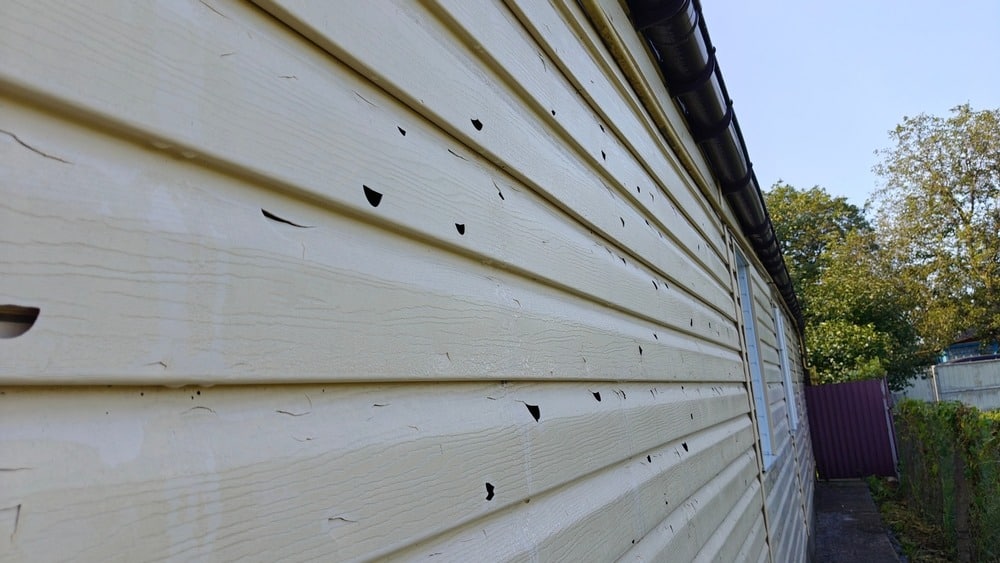
Hail, wind-driven debris, falling branches, and even errant baseballs can crack or puncture siding. Older vinyl can also become brittle in cold weather, making it more likely to crack on impact.
A single cracked panel may be a simple repair. Widespread cracking, multiple loose sections, or pieces that keep blowing off during storms usually point to siding that has reached the end of its useful life. If the damage followed a major storm, our storm damage team works directly with your insurance company on your behalf to coordinate the claim.
3. Severe Fading, Chalking, or Peeling Paint
Some fading is normal over time. However, dramatic color loss, a chalky residue that rubs off on your hand, or paint that peels and blisters can signal that the siding’s protective surface is breaking down.
For painted siding, frequent repainting is a warning in itself. If you find yourself repainting far more often than expected, the material underneath may no longer be holding up.
4. Moisture, Mold, Mildew, or Fungus
Green, black, or gray growth on your siding, especially near seams or on shaded walls, indicates that moisture is lingering where it shouldn’t. Surface mildew can sometimes be cleaned. But persistent growth, particularly around joints and trim, may mean water is getting behind the panels.
Maryland’s humid summers create favorable conditions for this kind of growth. When it keeps returning, it deserves a closer professional look.
5. Rot, Soft Spots, or Insect Damage
Press gently on suspicious areas with a screwdriver or your finger. If the siding or the material beneath it feels soft, spongy, or crumbles, rot may be present. Wood siding is especially vulnerable, and rot can spread into the sheathing and framing if it goes unaddressed.
Small holes, sawdust-like debris, or tunneling can also indicate insect activity. Damage of this kind typically calls for replacement rather than patching.
6. Rising Energy Bills and Indoor Drafts
If your heating and cooling costs have climbed without a clear explanation, your home’s exterior may be part of the cause. Gaps, loose panels, and deteriorating siding allow conditioned air to escape and outdoor air to seep in.
Drafty rooms can also point to aging windows or doors. Because siding, windows, and doors work together as a system, it often makes sense to evaluate them at the same time. Our energy-efficient doors and windows are designed to reduce heat transfer and keep your home comfortable year-round.
7. Interior Water Damage
This is the most serious warning sign. Peeling interior paint or wallpaper, stained drywall, or a musty smell along exterior walls can mean water has already made its way through the exterior envelope.
Interior damage of this kind should not wait. Have your siding, flashing, and the surrounding structure inspected promptly so the source can be identified and corrected.
Repair or Replace? How to Decide
Not every problem requires a full replacement. Isolated damage, such as one cracked panel or a small section hit by a branch, can often be repaired effectively. Replacement typically makes more sense when:
- Damage appears on multiple walls or sections
- Several of the warning signs above show up together
- Repairs are becoming frequent and costly
- Matching replacement panels is no longer possible due to fading or discontinued products
- Moisture or rot has reached the sheathing or framing
An honest assessment matters here. At Clearview, you speak directly with our family, not a salesperson, and we’ll tell you plainly whether a repair will serve you well or whether replacement is the wiser long-term choice.
Vinyl Siding vs. Fiber Cement Siding
If replacement is the right path, material selection is your next decision. Clearview installs both vinyl and fiber cement siding, and each offers distinct advantages.
Vinyl siding is a popular, cost-effective choice. It’s available in a wide range of colors and profiles, doesn’t require painting, and needs relatively little maintenance beyond periodic cleaning.
Fiber cement siding is a heavier, highly durable material that resists rot and insects and holds up well against impact. It can replicate the look of wood and can be painted, which offers flexibility in design. It generally involves a higher upfront investment and more specialized installation.
When weighing vinyl siding vs. fiber cement siding, consider your budget, your home’s architectural style, how long you plan to stay, and how much maintenance you’re comfortable with. We’ll walk you through those trade-offs during your consultation.
Why Proper Installation Matters
Even premium siding underperforms when it’s installed incorrectly. Panels need room to expand and contract, flashing must direct water away from openings, and the wall beneath should be inspected for existing damage before new material goes on.
Our in-house trained carpenters take pride in this kind of detail. Rather than covering problems, we address them, so your new siding protects your home as intended.
Protecting Your Home With Clearview
As a family-owned home exterior remodeling contractor in Maryland since 1983, Clearview Home Remodeling follows a clear, straightforward process:
- Consultation and estimate. We assess your siding, discuss your goals, and provide an honest recommendation.
- Design and planning. We help you select materials and colors, and we manage every aspect of the project.
- Installation and support. We verify that every detail meets your expectations and remain available for future needs.
Flexible financing options are also available for qualified homeowners.
Don’t Wait for Small Problems to Grow
Siding that’s warped, cracked, faded, or letting moisture in won’t improve on its own. Addressing siding damage in Maryland early helps protect your home’s structure, comfort, and value.
If you’ve noticed any of these warning signs, let us take a closer look. Explore our siding services, then request your free estimate from Clearview Home Remodeling. We’ll give you an honest assessment and a clear plan for protecting your home.